The “kitchen” is the most misunderstood part of pickleball — and the most important. It’s the 7-foot zone on each side of the net where you cannot hit the ball out of the air. Master it and you control the game. Misunderstand it and you’ll give away points you never needed to lose.
This guide covers the official kitchen rules in plain English, the faults that trip up new players, and the strategy that makes the kitchen the heart of competitive pickleball.
What Is the Kitchen?
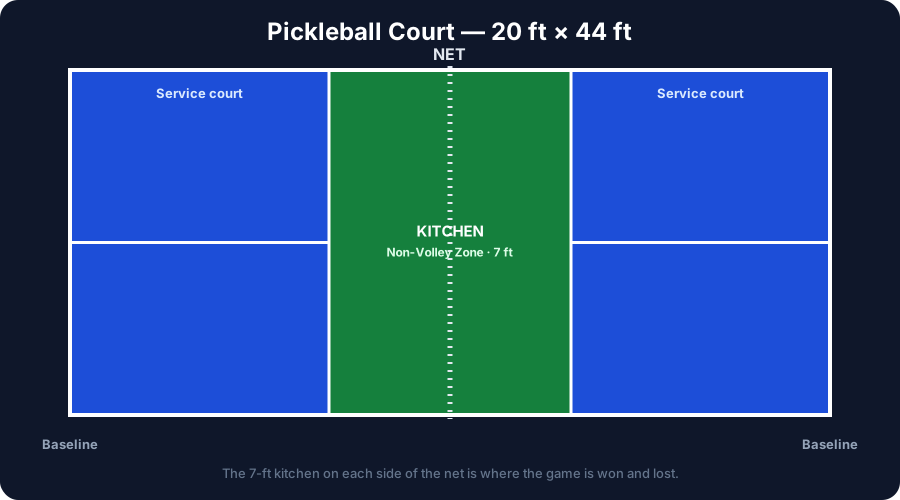
The kitchen’s official name is the non-volley zone (NVZ). It’s the area that extends 7 feet from the net on both sides, spanning the full 20-foot width of the court. The lines that bound it are part of the kitchen.
The single rule that defines it: you cannot volley the ball while standing in the kitchen. A volley is any shot you hit out of the air before it bounces. You’re free to step into the kitchen any time to play a ball that has already bounced — you just can’t be in there (or touching its line) when you hit a volley.
The Non-Volley Rule, Exactly
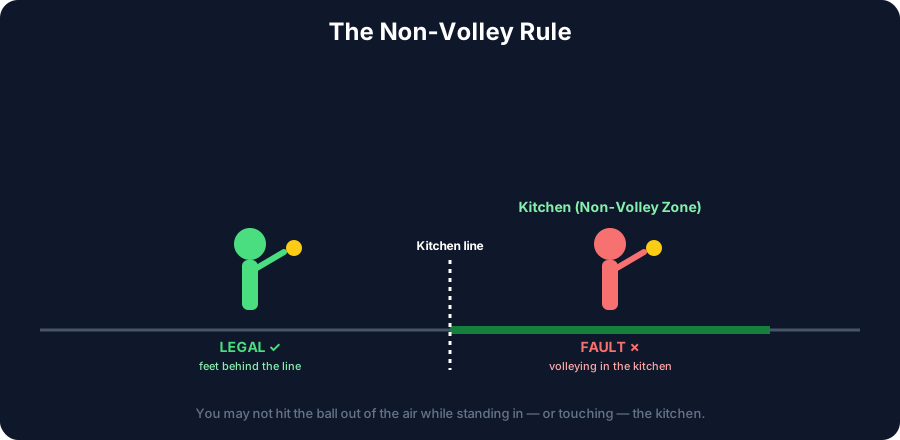
It is a fault if, while volleying the ball, you:
- Stand in the kitchen, or
- Touch the kitchen line, or
- Touch the kitchen with anything — a foot, a dropped paddle, your hat, sunglasses, or even momentum that carries you in after the hit.
That last point is the one that surprises people. Your momentum counts. If you volley a ball just outside the line but your follow-through carries you into the kitchen — or you stumble in afterward — it’s still a fault. The point isn’t over until you’ve fully stopped, so you must establish balance behind the line.
You may:
- Step into the kitchen to hit a ball that has bounced.
- Stand in the kitchen all day if you want (it’s just a terrible idea — see strategy below).
- Reach over the kitchen to hit a volley, as long as your feet are behind the line and you don’t touch the zone.
Common Kitchen Faults
| Situation | Legal? |
|---|---|
| Volleying with both feet behind the line | ✅ Legal |
| Volleying, then stepping into the kitchen on follow-through | ❌ Fault (momentum) |
| Standing in the kitchen, letting the ball bounce, then hitting | ✅ Legal |
| Foot touching the kitchen line during a volley | ❌ Fault |
| Partner volleys; you’re standing in the kitchen | ✅ Legal (you didn’t hit it) |
| Paddle falls into the kitchen as you volley | ❌ Fault |
Why the Kitchen Exists
Without the kitchen, tall athletic players would simply stand at the net and smash every ball downward — there’d be no rallies. The non-volley zone forces players to let some balls bounce, which creates the slow, chess-like dinking game that makes pickleball unique. It rewards touch and patience over pure power.
Kitchen Strategy: Win the Line
Here’s the strategic truth that separates 3.0 players from 4.0 players: the team that controls the kitchen line wins the point most of the time.
Get to the line
After the serve and return, your goal is to advance to the kitchen line as a team. Standing at the line lets you hit balls earlier, take away your opponents’ angles, and volley anything above net height before it can drop.
Stay out of “no-man’s-land”
The mid-court area between the baseline and the kitchen line is where points go to die. Balls land at your feet and you’re forced to hit weak, defensive shots. Move through it — don’t camp in it.
Dink with purpose
Once both teams reach the kitchen, the dinking battle begins. Keep your dinks low and unattackable, move your opponents side to side, and wait for a ball that pops up above the net. That’s your green light to attack. (See our full dinking guide.)
Be patient
New players lose kitchen battles by trying to end points too early — attacking balls that are too low and popping them into the net or sailing them long. The kitchen game rewards the player willing to hit one more dink than their opponent.
Quick Reference
- The kitchen = 7 feet from the net, both sides.
- You can’t volley while touching the kitchen or its line.
- Momentum into the kitchen after a volley is a fault.
- You can enter the kitchen to play a bounced ball.
- Strategically: get to the line, stay patient, and dink low.
The kitchen is where pickleball stops being about athleticism and starts being about skill. Learn the rules cold, then spend your practice time getting comfortable at the line — it’s the fastest way to climb from beginner to genuinely good.