If there’s one shot that defines pickleball, it’s the dink. It’s the soft, arcing shot that lands in your opponent’s kitchen — and the rallies built around it are where most points are actually won. Power gets the highlights, but dinking wins games.
This guide breaks down what a dink is, how to hit one properly, and the strategy that turns dinking from a passive reset into an offensive weapon.
What Is a Dink?
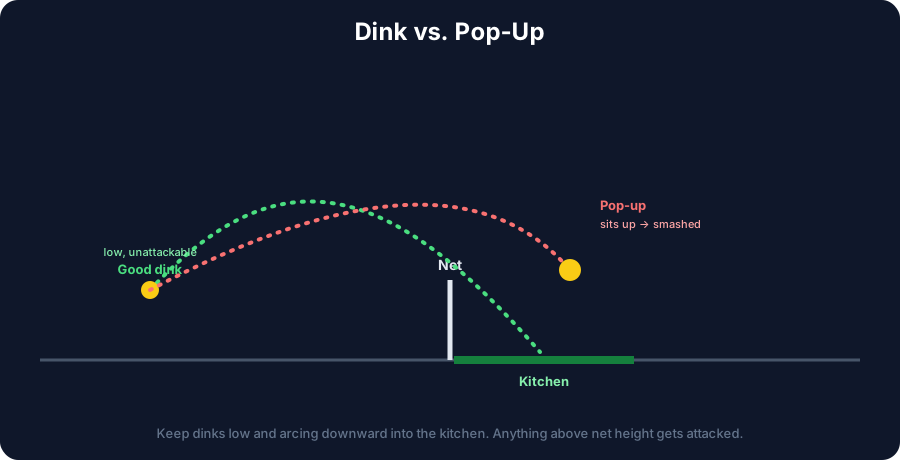
A dink is a soft shot hit from near the kitchen line that arcs over the net and lands in your opponent’s kitchen (non-volley zone). Because it lands short and low, your opponent can’t volley it aggressively — they have to hit up on it, which keeps the rally neutral and waits for someone to make a mistake.
The whole point of a good dink: make it unattackable. A ball that stays below net height when it reaches your opponent can’t be smashed. A ball that floats up above the net is a free putaway for them.
Proper Dinking Technique
1. Use your shoulder, not your wrist
The most common beginner mistake is “wristy” dinks — flicking the wrist for the lift. This is inconsistent and pops balls up. Instead, keep your wrist firm and push the ball with a gentle shoulder motion, like you’re lifting something onto a shelf. Think push, not hit.
2. Contact out in front
Make contact with the ball in front of your body, not beside or behind you. A paddle face slightly open (tilted up) provides the soft lift you need to clear the net while keeping the ball descending.
3. Stay low
Bend your knees and get your body down to the level of the ball rather than reaching down with just your arm. A low, athletic stance gives you control and lets you push up and forward through the shot.
4. Soft hands
Grip pressure matters enormously. Hold the paddle loosely — maybe a 3 out of 10. A death grip transfers too much energy and sends dinks long or high. Soft hands absorb pace and let you “catch and release” the ball.
5. Aim low over the net
Target a window just above the net tape. The lower your dink crosses the net (while still clearing it), the lower it stays on the other side — and the harder it is to attack.
Where to Aim Your Dinks
Dinking isn’t just keeping the ball in play — it’s maneuvering your opponent into a mistake. Good targets:
- At the opponent’s feet — the hardest spot to hit a good dink back from.
- To the middle — between two opponents, creating confusion about who takes it.
- Crosscourt — the diagonal gives you more court and a lower net in the center, the safest high-percentage dink.
- To the backhand — most players have a weaker backhand dink.
The crosscourt dink is your bread and butter: more margin, lower net, and a longer landing area. Win the crosscourt dink battle and you’ll force the error or the pop-up you’re waiting for.
When to Attack
The patient dinker is waiting for one thing: a ball that comes back above net height. When your opponent pops one up, that’s your cue to speed it up — drive it at their body or into the open court. Until then, keep dinking. The discipline to hit “just one more dink” instead of forcing a low ball is what separates winning players.
Common Dinking Mistakes
- Hitting too hard — pace gives your opponent a target above the net. Softer is safer.
- Wristy flicks — inconsistent height. Use the shoulder.
- Standing too upright — you lose touch and reach. Bend the knees.
- Backing off the line — dinking from no-man’s-land gives opponents angles. Hold the kitchen line.
- Impatience — attacking a ball that’s too low and dumping it into the net.
Drills to Improve Your Dink
- Crosscourt dink rally — with a partner, dink only crosscourt and count how many you can sustain. Aim for 30+ in a row.
- Dink targets — place a towel or cone in the kitchen and try to land dinks on it.
- Dink-and-freeze — after each dink, freeze and check your balance. If you’re off balance, your footwork needs work.
Dinking feels boring at first — until you realize the player who dinks better simply wins more. Spend 10 minutes of every session on dinking and you’ll climb faster than any new paddle could take you. Speaking of which, a control-oriented paddle helps: see our best paddles picks for soft-game-friendly options.